
Blog
Teak Garden Furniture: Outdoor Tables, Chairs, and Sets

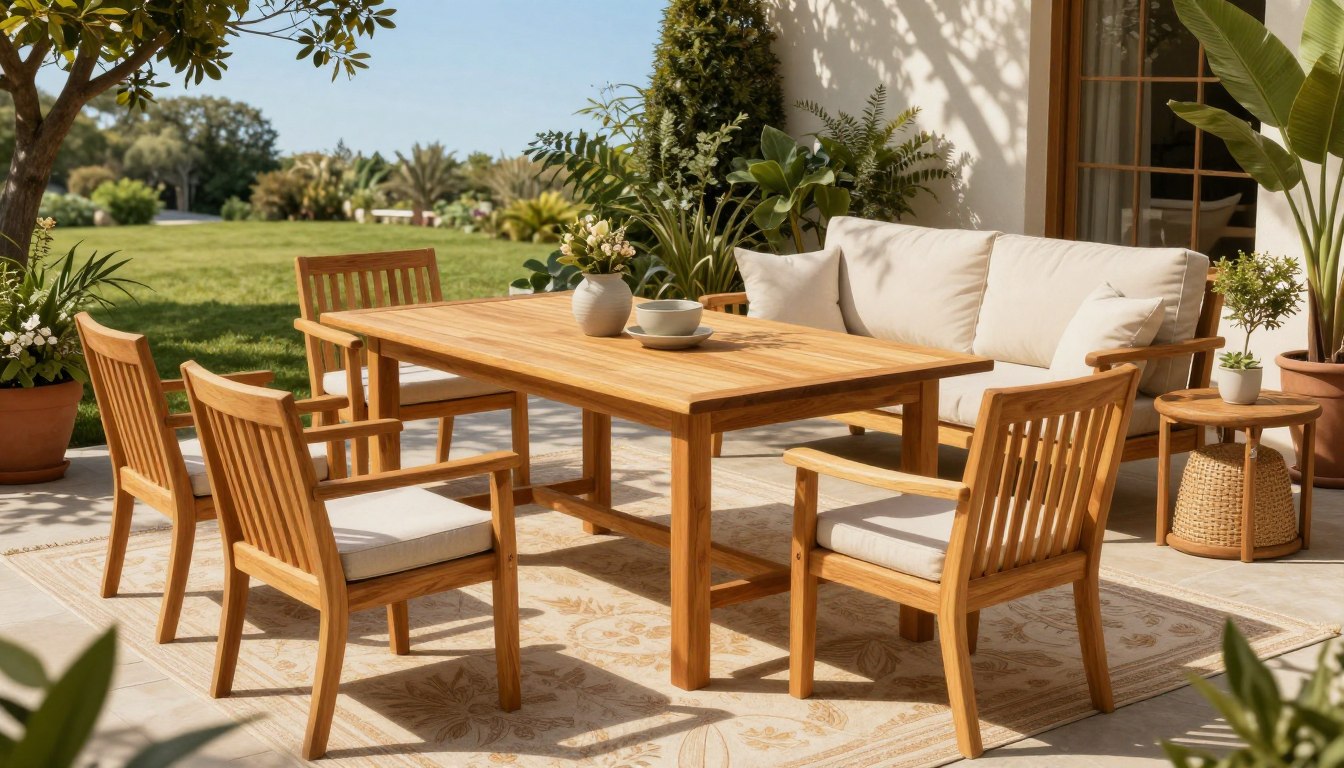
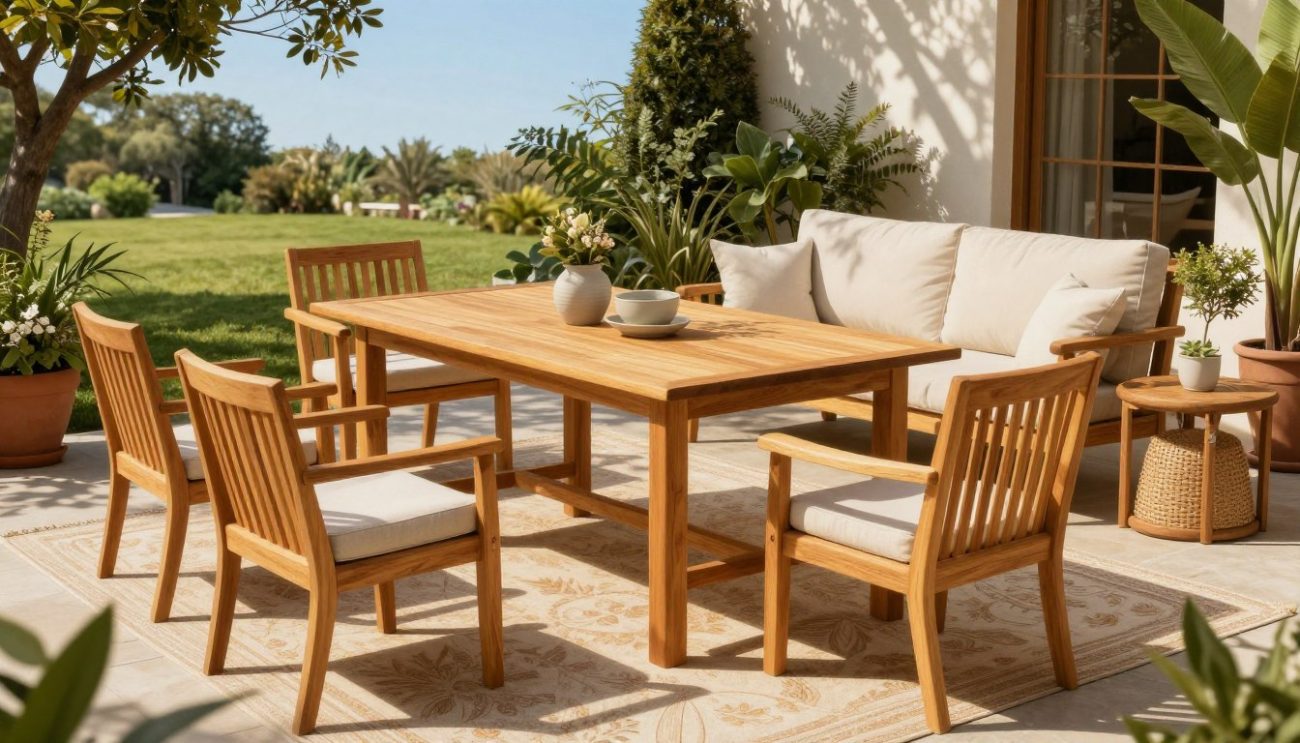
Teak Garden Furniture suits patios and gardens where you want durable outdoor dining or lounging with a wood surface that can weather naturally. It works for outdoor living spaces where you want furniture for meals, quiet breaks, or both. Untreated teak changes from honey-gold to silver-gray outdoors; that natural color is called patina. You can welcome the change or maintain a warmer tone with a finish.
Choosing the right pieces starts with the activities you want your patio to support. A table and chairs can make outdoor meals easier, while lounge seating gives you a place to read or visit. A mix can work when the space has room for separate uses. The practical choice depends on your layout, preferred appearance, and willingness to care for the finish.
Key Takeaways
- Choose pieces based on how you plan to use your patio or garden.
- Measure the usable area, including room for occupied chairs and walking routes.
- Teak can weather naturally or receive care to maintain a warmer tone.
- Check the stated grade, sourcing claims, and construction details.
- Review delivery access, assembly needs, and care terms before ordering.
Decide whether outdoor meals, relaxed seating, or both matter most before narrowing your choices.
How to Choose Teak Garden Furniture for Your Space
Measure the usable patio area first, including the space people need to move around occupied chairs. Usable area means the space left after accounting for doors, planters, paths, and other features. A dining table is typically 28-30 inches high, so check its dimensions alongside the clearance around it.
Allow about 24 inches of table edge per diner as a planning guide, then account for chairs that pull back from the table. A main walking route needs roughly 36 inches. These allowances help you compare furniture dimensions with the real space available, rather than judging a table by its top alone.
A layout that fits on paper can still feel cramped once chairs are occupied.
Mark the furniture zone before choosing tables and chairs. Include the path from the seating area to the door, and leave space for opening doors fully. Think about whether a planter or grill will stay in place, since moving one later may change how the outdoor furniture fits.
Use this checklist to plan the footprint:
- Measure the furniture zone.
- Mark the table footprint.
- Allow for chair pull-back.
- Check the route to the door.
- Account for other outdoor features.
Chair size and shape affect the room needed around a table. Wide arms may take up more space than a simple dining chair, while a bench can change how people enter and leave a seat. Consider how many people will use the space on an ordinary day, not only when you host guests.
For a small patio, a drawing can help reveal conflicts between a chair and a door swing. You can also mark the outline with tape or removable objects, then test the route while walking around it. Mark the table and chair footprints on the ground before placing an order.
Furniture Types for Dining, Lounging, and Gathering
A table-and-chair arrangement works best when meals are the main reason people gather outdoors. Dining pieces give you a defined place to eat, serve food, and spend time together. A teak outdoor furniture arrangement can focus on dining, lounging, or a practical mix of both.
Choose the main furniture form around the activity you expect to do most often. Dining tables and chairs support meals and everyday tasks, such as having coffee or working outside. Their shape and placement help define a dining area, even when the patio serves other purposes.
Dining tables and chairs for outdoor meals
Outdoor dining furniture makes it easier to gather around a shared surface. You can choose a complete set for a coordinated look or select individual tables and chairs to suit an existing layout. When people use the table for more than meals, consider how its position affects access to the rest of the garden.
A dining area can stay simple: a table, chairs, and enough clear room to move around them. A bench may suit one side when you want flexible seating without committing to a full lounge group. It can also tuck close to the table when not in use, depending on its dimensions.
Lounge and occasional pieces for relaxed seating
For conversation or a quiet break, lounge options include sofas, loveseats, club chairs, and chaise lounges. A chaise offers a longer seat for stretching out, while a loveseat keeps a smaller group together. Consider what you will do there, such as reading, visiting, or resting after a meal.
Benches and occasional pieces, including coffee and end tables, can support relaxed seating without taking over the patio. An end table gives a chair a nearby surface; a coffee table can anchor a group of seats. These pieces can be chosen individually or as part of coordinated collections.
Teak outdoor designs can work across dining and lounge areas, but each zone should have a clear purpose. A compact patio may favor one use, while a larger garden can hold separate spaces for meals and conversation. Pieces do not need to come from one collection if their scale and finishes work together.
Choose pieces around the activity you expect to do most often, not just the furniture style you like in a photo.
Teak Grades and Tree Maturity
Grade A comes from mature-tree heartwood, while lower grades use less oil-rich parts of the tree. Heartwood is the inner wood, and its natural oils contribute to outdoor performance. Forest teak typically takes 80-120 years to mature, while plantation teak may be harvested at around 60 years.
The stated grade helps describe the wood used, but it does not replace a close look at the furniture. Differences in oil, color, and grain can affect how a piece appears and performs outdoors. Use the distinctions below to understand what a grade claim means.
| Grade | Part or maturity of tree | Natural oil and appearance | Meaning for outdoor use |
|---|---|---|---|
| Grade A | Heartwood of mature trees | Rich in natural oil; generally even grain | Oil-rich wood suited to outdoor furniture |
| Grade B | Outer heartwood | Less oil; lighter color and less even grain | Less naturally oil-rich than Grade A |
| Grade C | Sapwood or immature trees | Very little or no protective oil | Less natural protection for outdoor exposure |
Color and grain can offer clues when you inspect teak wood. A richer color or even pattern may catch your eye, but appearance alone cannot confirm grade. Wood can vary across a piece, and a finish can change how its surface looks.
Ask what the grade claim refers to, especially when a product description uses a broad term without explaining the wood source. The difference between heartwood and sapwood matters more than a polished photograph. A clear product description should identify the stated grade and the part of the tree it describes.
Tree maturity is another detail to weigh when comparing quality. The typical maturity periods differ between forest and plantation teak, but age alone does not describe every part of a finished furniture piece. Construction, finish, and care also affect the buyer’s experience.
Ask what part of the tree the stated grade refers to before comparing finishes or designs.
FSC and SVLK Sourcing Standards
FSC addresses forest management, while SVLK is Indonesia’s timber-legality certification for exports. They answer different questions about sourcing, so one should not be treated as a substitute for the other. FSC is a voluntary global forest-management standard.
FSC forest-management standards include 10 principles and 57 criteria. Those standards relate to how forests are managed. SVLK, by contrast, is Indonesia’s mandatory timber-legality certification for timber exports. A legality certification concerns legal timber, not the broader forest-management questions addressed by FSC.
When comparing teak wood products, look for the specific certification named in product or supply-chain information. A product may describe a forest-management claim, a timber-legality claim, or both. The wording matters because a general statement about responsible materials does not explain which standard applies.
FSC certification and SVLK can both be relevant to a sourcing decision, but they do not mean the same thing. One describes a voluntary standard for forest management; the other is Indonesia’s mandatory timber-legality certification for exports. Neither label alone tells you every detail about a piece’s quality or construction.
Read certification claims in context. Product details may identify a standard, while supply-chain information may explain how the claim relates to the timber. Keep the distinction clear when comparing furniture: legality and forest management are separate questions, even when both matter to you.
Match the certification named in a listing to the specific sourcing question you want answered.
What Makes Teak Suitable for Outdoor Use
Teak’s natural oils and rubber help it resist moisture, rot, and pests in outdoor settings. That natural content is one reason teak outdoor furniture is used in exposed spaces. Teak is the wood of Tectona grandis, a species valued for outdoor furniture.
Natural oils and rubber help protect the wood, but they do not make every piece perform identically. Local weather, the furniture’s construction, and the care it receives all matter. A sheltered patio and a fully exposed garden place different demands on the same material.
Natural oils and exposure to moisture
Teak’s natural oils help limit the effects of moisture, while its rubber also supports resistance to rot and pests. These traits make the wood a practical choice for outdoor furniture, including tables and chairs that remain outside. They do not remove the need to consider exposure and construction.
Rain, damp air, and shifting weather can affect outdoor furniture over time. A piece beneath a roof experiences a different setting from one left in an open yard. Look at how water can reach the furniture and whether the design allows it to dry between wet periods.
Durability without a painted finish
Outdoor-use teak can remain untreated and weather without requiring paint. That gives you the choice to leave the surface natural rather than cover it with a painted finish. Treatments may be chosen for appearance, but they are not a requirement for teak’s outdoor use.
Durability still depends on more than the species. Joints need to fit well, hardware must suit outdoor exposure, and the piece should match the conditions at your home. Teak furniture can be a strong option, yet a poor build does not become sound simply because it uses teak.
Consider where furniture will sit through changing weather. A spot with limited shelter may need different attention from a covered patio, especially in places with heavy rain or coastal exposure. The wood’s natural traits support outdoor use, while the design and environment shape how it holds up.
Consider the furniture’s construction and the exposure at your home alongside the wood species.
The Natural Silver-Gray Patina
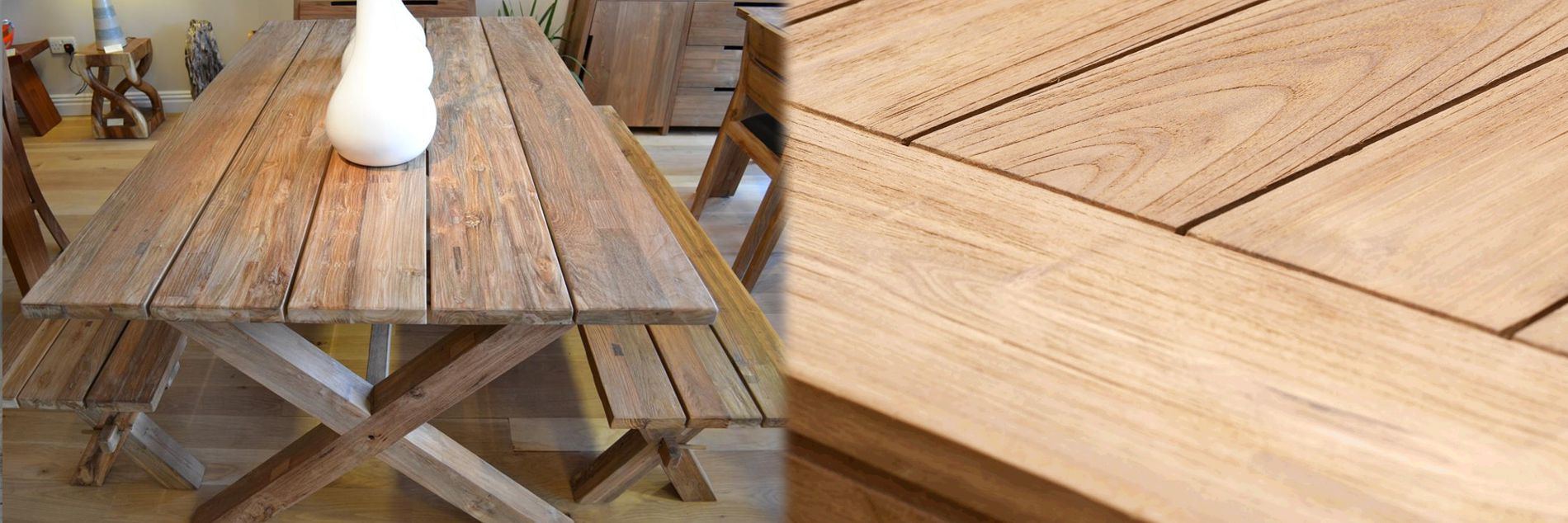
Untreated teak moves from honey-gold toward silver-gray outdoors, with the timing affected by sunlight. Patina is the natural silver-gray surface color teak develops as it weathers. The color shift may take about 3-12 months, depending on sun exposure.
The change is cosmetic and does not damage the wood’s structure. A sunny location may weather faster than a shaded one, so the same furniture can change at different rates around a home. The surface may also look different as sunlight reaches each part of a piece.
Patina can develop unevenly across furniture. A tabletop that receives direct sun may change sooner than a sheltered edge, and chairs may weather differently depending on where they sit. These shifts can make the finished gray vary across pieces or surfaces.
Some owners welcome the softer, weathered appearance; others prefer to keep a warmer color. Decide which look suits your outdoor space before choosing untreated teak. The change is part of how the material responds to outdoor exposure, not a sign that its structure has failed.
Photos may show furniture at different stages of weathering, so the surface color in a listing may not represent what you see after months outdoors. Sunlight, shade, and the piece’s placement all shape the result. The gray tone can be subtle or more pronounced across a set.
Choose the furniture only after deciding whether you welcome the gray or want to maintain a warmer tone.
Choosing an Untreated or Golden Finish
Leaving teak untreated suits owners who prefer a natural silver-gray surface over recurring color upkeep. Finish treatments focus on appearance rather than being necessary for teak’s outdoor use. Sunlight and local exposure affect how often a treatment may need attention.
Teak oil or sealer may need reapplication in 6-12 months, depending on conditions and sun exposure. UV means ultraviolet light, which contributes to outdoor color change. A product’s care directions matter because protectors and oils can have different instructions.
| Approach | Expected appearance | Upkeep implication | Consideration before choosing |
|---|---|---|---|
| Leave untreated | Natural silver-gray patina over time | No finish reapplication for color | Accept a changing outdoor surface |
| Use a teak protector or sealer | Warmer color may be maintained | Reapply as conditions and sun exposure require | Follow the specific product directions |
| Use teak oil | Warmer, richer-looking surface | May need reapplication in 6-12 months | Check whether the furniture maker allows oil |
Leaving the surface untreated keeps the care choice simple if you are comfortable with weathering. A protector or sealer may help maintain a warmer appearance, while teak oil also changes the surface color. These treatments are about the look you want, not a condition for using teak outdoors.
Maintenance frequency depends on exposure. A sunny, exposed patio can affect the finish differently from a shaded location, and products may have distinct application directions. Think about whether you want to repeat finish care as part of your outdoor routine.
Do not assume that every oil or sealer suits every piece. A finish can affect the surface, so follow guidance for the specific furniture rather than applying a product by habit. Check the care instructions for the specific furniture before applying any finish.
Cleaning Teak Without Damaging the Grain
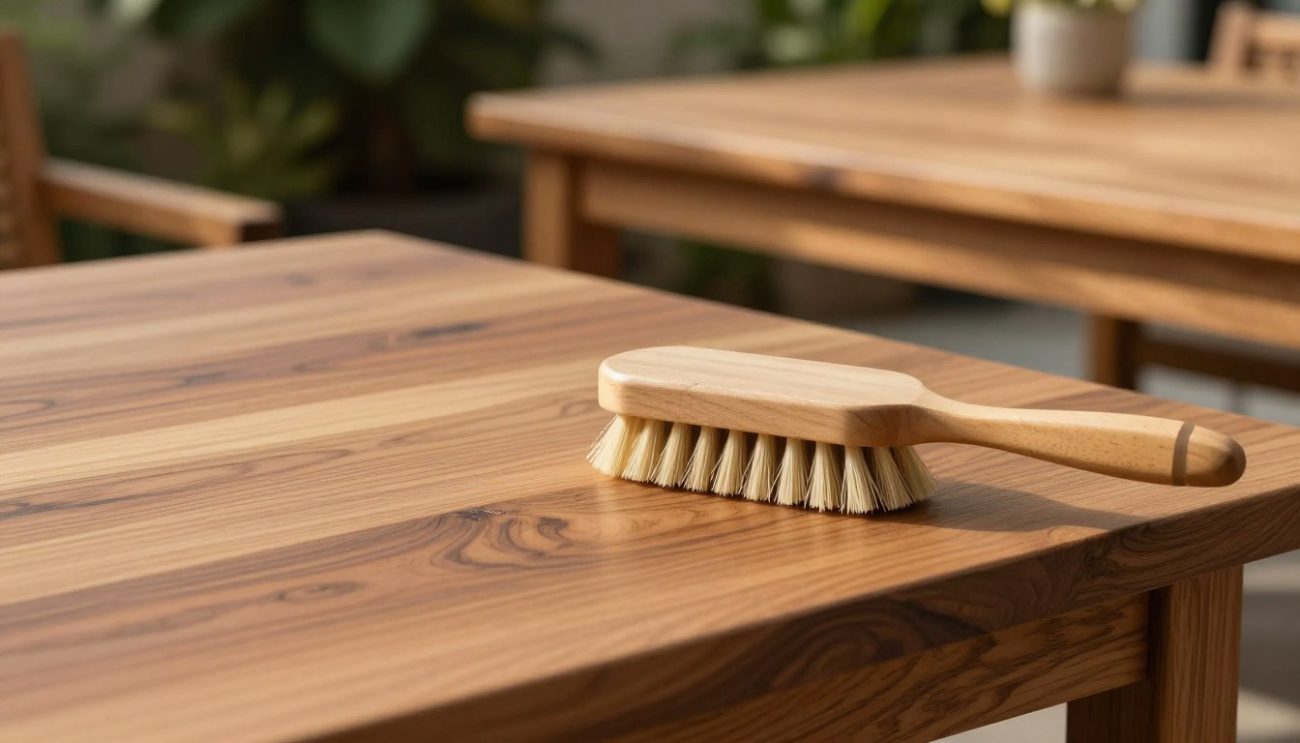
A soft-bristle brush and soapy water clean teak without the abrasion of a hard brush. Gentle cleaning helps remove ordinary dirt while protecting the wood grain. Use mild dish soap when needed, then rinse the surface thoroughly and let it dry completely.
Avoid hard brushes and pressure washers, which can erode the surface and damage the grain. A light touch is usually enough for routine outdoor furniture care. Brush with the grain rather than scrubbing across it.
Routine surface cleaning
For light dirt, use a damp, non-abrasive cloth or a soft-bristle brush with soapy water. Neighbor’s general guidance is a once-a-year wash with a soft brush, mild dish soap, and water. This is a broad routine, not a fixed schedule for every exposure.
Wooden outdoor furniture can also be wiped with a damp, non-abrasive cloth twice a year. Rinse away soap and loosened dirt, then allow the wood to dry completely. A thorough rinse helps keep cleaning solution from drying on the surface.
| Condition | Tool | Cleaning solution | Frequency or limit |
|---|---|---|---|
| Light dirt | Damp, non-abrasive cloth | Water | Wipe twice a year as a general routine |
| Stubborn spots | Soft-bristle brush | Mild dish soap and warm water | Use on spots, then rinse thoroughly |
| Broader outdoor buildup | Soft-bristle brush | Mild dish soap and water | General wash about once a year |
Stubborn spots and outdoor debris
For stuck-on food or other spots, start with mild dish soap and warm water. Work the solution gently with a soft-bristle brush, following the grain. Rinse thoroughly so no soap remains, then give the furniture time to dry before using it again.
Leaves and other outdoor debris can sit in corners or against joints. Remove loose material without scraping the wood, then clean any residue with a damp cloth. A hard tool can leave marks, so choose a soft cloth or brush instead.
Pressure washers can force water against the surface and wear away the wood. Hard brushes can also damage the grain, even when a stain seems difficult to remove. If a spot remains, repeat a gentle wash rather than increasing the pressure or switching to an abrasive tool.
Let the surface dry completely before applying any protector.
A Practical Teak Cleaning Schedule
Furniture beside a pool or hot tub needs weekly water wiping because chlorine can accumulate on the wood. Poolside exposure calls for more frequent attention than a general outdoor cleaning routine. Use water to wipe the furniture, especially surfaces exposed to splashes.
Weekly water wiping is the exception to a broader once-a-year soft-brush wash. Twice-yearly surface wiping and an annual brush wash are separate practical routines. The right pattern depends on whether furniture sits near a pool or faces ordinary outdoor use.
Use this seasonal checklist to keep the schedule manageable:
- Spring: Check surfaces for dirt or debris after winter exposure.
- Fall: Wipe the furniture as outdoor use changes with the season.
- Weekly near a pool or hot tub: Wipe with water to remove accumulating chlorine.
A spring surface check helps you notice dirt or residue before the outdoor season gets busy. A fall wipe-down gives the furniture attention as you prepare for changing weather. These checks are practical moments to look over the surfaces, not a reason to use harsh tools.
For ordinary exposure, twice-yearly wiping and a once-a-year soft-brush wash are distinct routines. You can wipe the surface more often when it needs it, but poolside furniture has a specific reason for weekly attention. Chlorine buildup makes regular water wiping useful in that setting.
Keep the poolside routine separate from the broader seasonal cleaning schedule.
Leaving Teak Furniture Outdoors Through the Seasons
Teak furniture can stay outdoors year-round, with added protection useful in especially wet, snowy, or coastal conditions. Local exposure should guide how you protect outdoor furniture. Heavy rain, snow, and coastal conditions make covers and seasonal cleaning useful.
Furniture can remain outside through the seasons, but a cover may help in harsher conditions. Choose a cover that suits the piece and the exposure at your home. Protection is most useful when weather brings repeated moisture or other challenging conditions.
In a sheltered setting, you may leave teak furniture outdoors without covering it all year. An open patio exposed to heavy rain or snow presents a different situation. Coastal exposure can also make seasonal cleaning and added protection worth considering.
Covering furniture for long periods can trap moisture. That dampness may encourage mildew, especially when air cannot reach the wood. Periodically uncover the furniture during extended covered storage so it can dry.
Think about the cover as part of a seasonal routine, not a permanent barrier. If you keep furniture covered for an extended period, give it chances to air out. This small habit helps avoid leaving moisture trapped against the surfaces.
How much cover you need depends on where the furniture sits and what weather reaches it. A roof or overhang may reduce direct exposure, while an open garden leaves the piece more exposed. Choose a protection approach that fits the actual setting instead of treating every patio alike.
Uncover furniture during extended covered storage so trapped moisture does not linger.
Dining Table Shapes and Seating Capacity
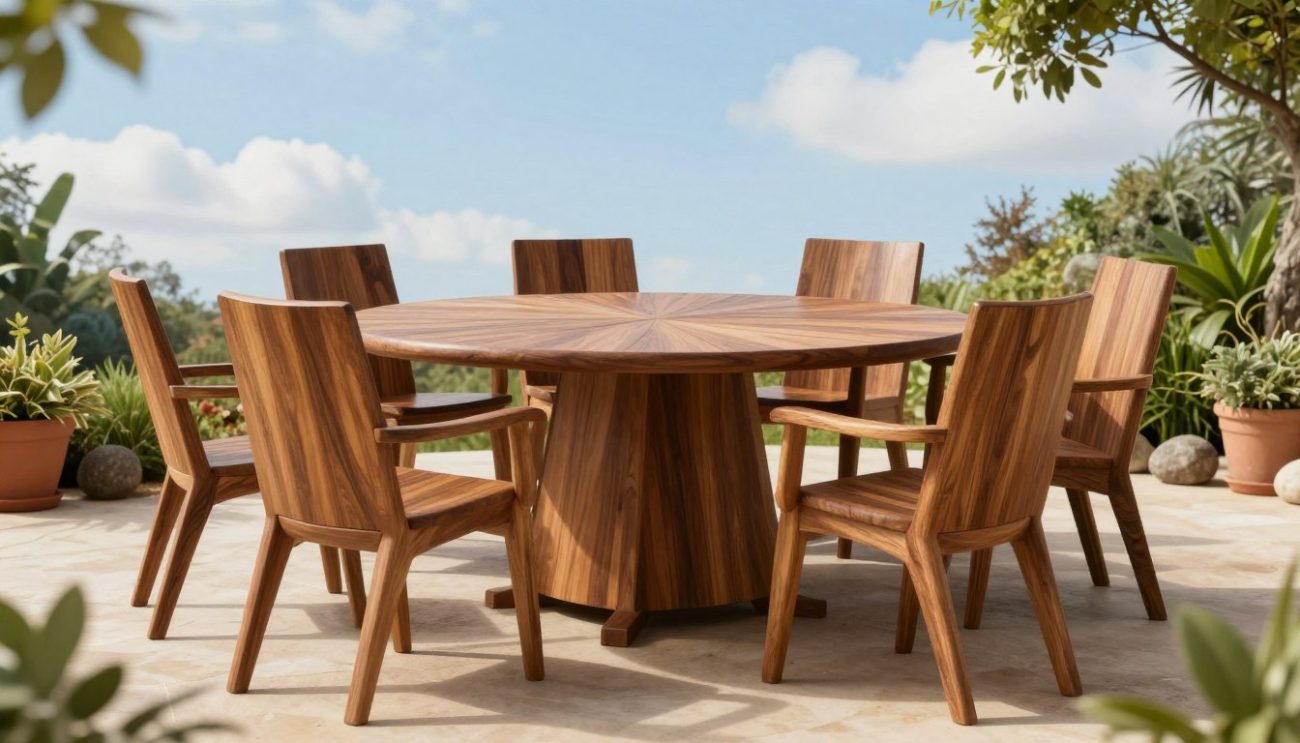
Round, oval, and rectangular tables offer different ways to fit dining into an outdoor layout. Shape affects the arrangement as much as the look, especially when a patio has a defined footprint. Typical seating examples include 4, 6, or 8 diners.
Capacity depends on table dimensions, chair width, and room to pull chairs out. A seat count is only a starting point, not a promise that every chair will fit comfortably. Compare the full table size with the furniture area you measured.
| Shape | Typical seating example | Layout quality | Situation where it may suit |
|---|---|---|---|
| Round | 4 or 6 diners | Compact, shared central surface | A defined patio area for conversation |
| Oval | 6 or 8 diners | Long surface with softened ends | A dining zone that needs a longer table |
| Rectangular | 4, 6, or 8 diners | Clear sides and a straight layout | A longer patio or garden dining area |
A round table can keep diners facing one another around a central surface. An oval table offers length with rounded ends, while a rectangular design creates a straightforward line in the layout. These qualities can help you picture how the table will sit among doors, walls, and other furniture.
Use the table’s actual dimensions when judging its fit. Two tables with the same typical seat count may take up different amounts of space, and chair widths vary. A chair also needs room to move back when someone sits down or stands up.
Consider how people approach the table. A long rectangular top may suit a narrow area, while a round surface may work well where the space opens around it. The arrangement of paths and nearby furniture can change which form feels practical.
Match the table’s real dimensions to the footprint you measured before choosing by seat count alone.
Building a Coordinated Patio Furniture Set
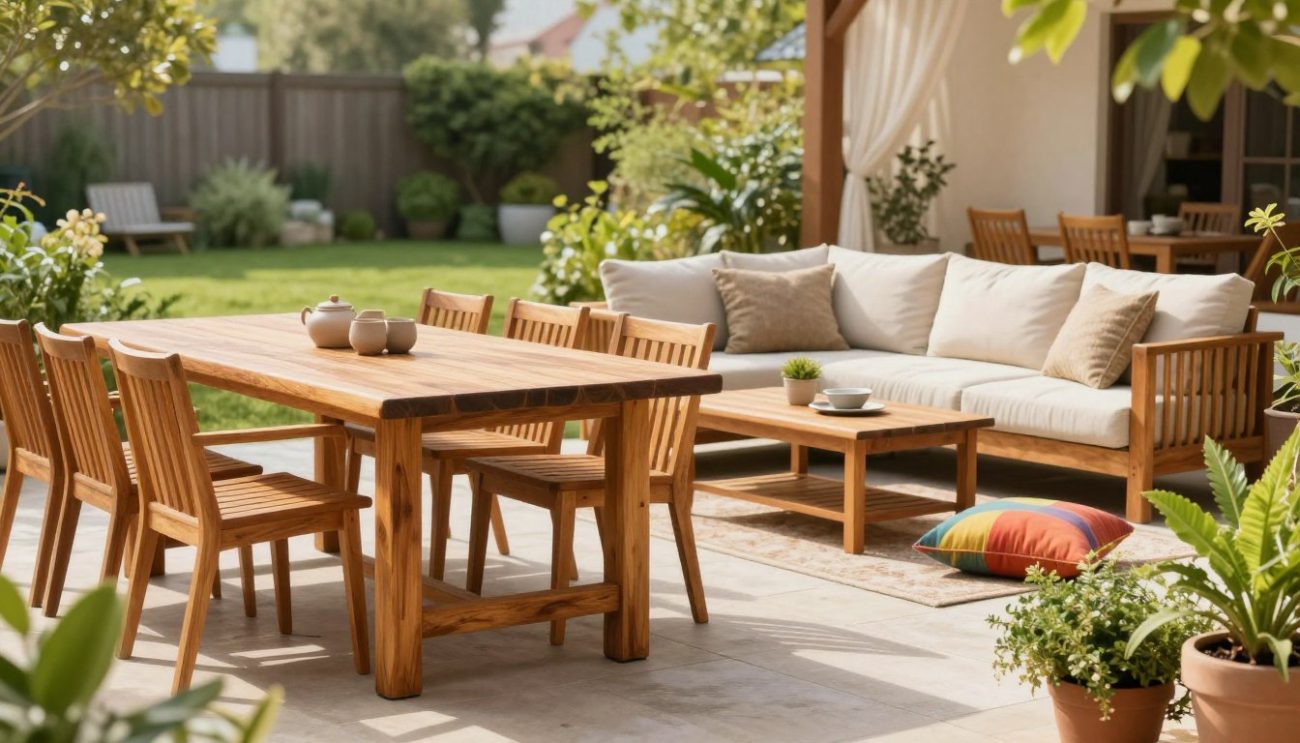
A coordinated patio feels intentional when one main use anchors the layout. Start with a clear center, such as a dining area or a lounge area, then add supporting pieces. A mixed-use patio can serve both functions when each zone has room to work.
Dining and lounge areas serve two distinct functions, so give each a clear role. A table can anchor the dining zone, while a group of seats can define a place for conversation. Supporting furniture should make those activities easier without crowding the patio.
Anchor the space around dining or lounging
Choose the main use first, then place the largest piece where it supports that activity. If dining matters most, let the table guide the arrangement. For a lounge-focused patio, organize the seats around the way people will talk, read, or take a break.
A mixed-use outdoor area needs enough separation for both activities to feel comfortable. You might place a dining table nearer the house and keep lounge seating in a quieter corner. The precise arrangement depends on the footprint and paths through the space.
Add supporting pieces and complementary materials
Once the main area is set, consider a bench or a small occasional table. Supporting pieces can add a useful surface or another seat without changing the main purpose of the layout. Choose only what the space can hold and what you expect to use.
Teak can pair with different materials. These options can add contrast while keeping the furniture group visually connected:
- Rope adds a woven texture beside teak wood.
- Aluminum introduces a clean, light-looking frame.
- Concrete brings a solid, grounded surface.
- Ceramic adds a smooth, finished accent.
Use scale and color to coordinate materials rather than matching every surface exactly. A small ceramic accent can echo a cushion color, while an aluminum frame can balance the warmth of teak. Repeating one tone or texture can tie a collection together without making every piece identical.
Think about how the designs relate from across the patio. A large table paired with very small supporting pieces may feel unbalanced, while too many contrasting finishes can compete for attention. Keep the furniture group focused on the activities the space can comfortably support.
Joinery and Hardware Details to Inspect
A mortise-and-tenon joint connects two pieces of wood through a fitted cavity and tongue. The interlocking connection can be secured with glue or pegs and may be repaired. The cavity is the mortise; the matching tongue is the tenon.
Close-fitting joints and steady construction matter more than a furniture label alone. Mortise-and-tenon joinery creates a mechanical connection between the parts. Inspect the joint fit as well as the overall build before judging quality.
Look for joints that meet closely without obvious gaps or movement. A well-fitted connection should not feel loose when you gently test the assembled piece. A joint that can be repaired offers a practical advantage, but repairability does not excuse a poor fit.
Hardware also needs to suit outdoor exposure. Check how metal parts are attached and whether the design leaves places where water can collect. There is no single hardware grade that applies to every teak furniture piece, so judge the specific components and construction.
A strong joint cannot compensate for weak overall construction. The frame should feel steady, with parts aligned and no unexpected wobble. Take time to examine both visible connections and the way the complete piece behaves under ordinary use.
If furniture arrives assembled, inspect it in person rather than relying only on product photographs. A photo may show a joint’s shape but not its fit or steadiness. If assembly is required, follow the instructions and check that connections sit as intended.
Inspect both the joint fit and the overall steadiness of the assembled piece.
Comfort and Finish Choices That Shape the Set
A chair that looks right can still feel uncomfortable if its seat height or cushion changes the fit at the table. Test the whole setup, including the chair, cushion, and table. A typical dining-chair seat is about 17-19 inches high.
Compare seat height with table height and cushion thickness before choosing chairs. A cushion adds height and changes how you sit, so assess the finished arrangement rather than the bare chair. Comfort can also depend on the seat shape and back support.
Seat comfort and cushions
Try sitting in a chair if possible, or study its shape and dimensions carefully. Notice whether the seat feels supportive and whether the back gives you a comfortable position. The table and chair should work together when you sit down, reach the surface, and stand up.
Cushions can make a firm seat feel more comfortable, but their thickness affects the final seat height. Consider how the cushion stays in place and whether its color suits the furniture. A cushion should add comfort without making the chair feel too high at the table.
Color, texture, and material coordination
Decide whether the set should feel formal, relaxed, or contemporary. A simple design can keep the focus on the wood, while textured cushions or contrasting materials can give the patio a more casual feel. Choose an overall direction that fits the way you use the space.
Cushion color can complement teak without distracting from it. A restrained color can let the grain stand out, while a stronger hue can become an accent. Consider how the fabric and any other materials look beside the wood in both sun and shade.
Texture matters as much as color when pieces sit close together. Smooth surfaces can keep a set feeling simple, while woven details add a softer contrast. You can coordinate through one repeated color or material instead of matching every design element.
Compare the chair, cushion, and table together rather than judging each choice separately.
Final Checks Before You Order
Before ordering, confirm that the furniture fits both the patio and the route into it. Delivery access matters as much as the final layout. Measure the destination space and the route the furniture must travel.
A comfortable layout is not enough if the item cannot pass through the delivery route. Check doorways, gates, turns, and any narrow access points along the way. A large product may need a clear path from the delivery spot to its final position.
Measure the destination and the full delivery route before you place the order.
Use this checklist to review the product details before checkout:
- Furniture dimensions: Compare the listed dimensions with the patio footprint.
- Delivery access: Measure the route through doors, gates, and turns.
- Assembly needs: Check whether assembly is required and what the process involves.
- Included components: Confirm whether cushions, covers, or other pictured parts are included.
- Care and warranty terms: Read the written instructions and terms for the specific product.
Product photographs may show accessories that are not included, so identify each component listed with the item. Check whether cushions or covers come with the furniture, rather than assuming they are part of the set. Clear details help you compare products accurately.
Assembly requirements can affect the delivery route and the time needed before use. Confirm whether the furniture arrives assembled or needs setup, and look for the parts and instructions included. Keep care and warranty terms with your order information for later reference.
Review the full product details before checkout, including dimensions and the written terms. A shortlist may look suitable until you compare delivery access or included components. Keep the product details and care instructions available for reference after delivery.
Conclusion
The right teak set is the one that suits the way you use your outdoor space and the care you want to give it. A good choice balances the patio footprint, the activities you enjoy, and the appearance you prefer. Untreated teak can weather naturally, while finish care can help maintain a warmer tone.
When you shop, compare product dimensions and construction details alongside the stated care needs. Choose furniture that fits comfortably into the space and supports the way you plan to use it. Measure your area and compare the dimensions and care details of the pieces on your shortlist before you order.