
Blog
Teak Outdoor Furniture: Patio Sets and Dining Chairs

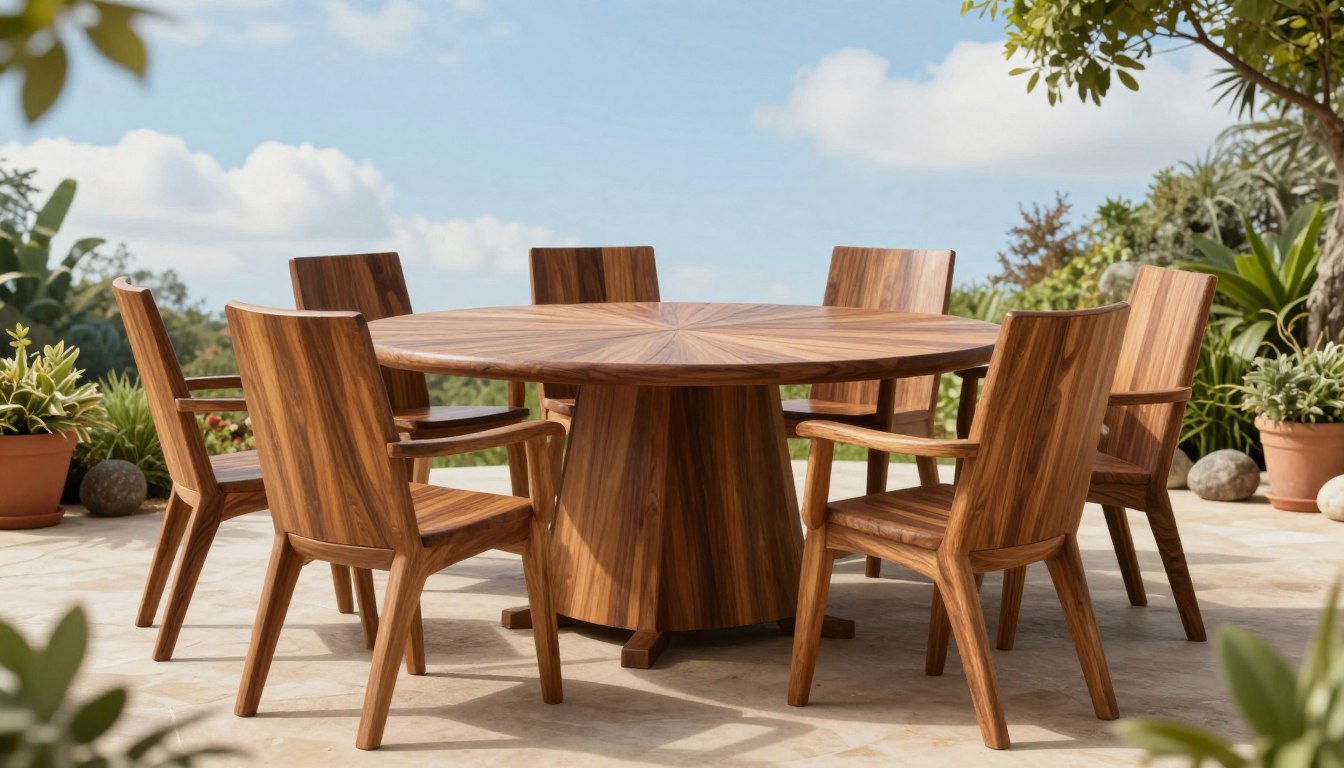
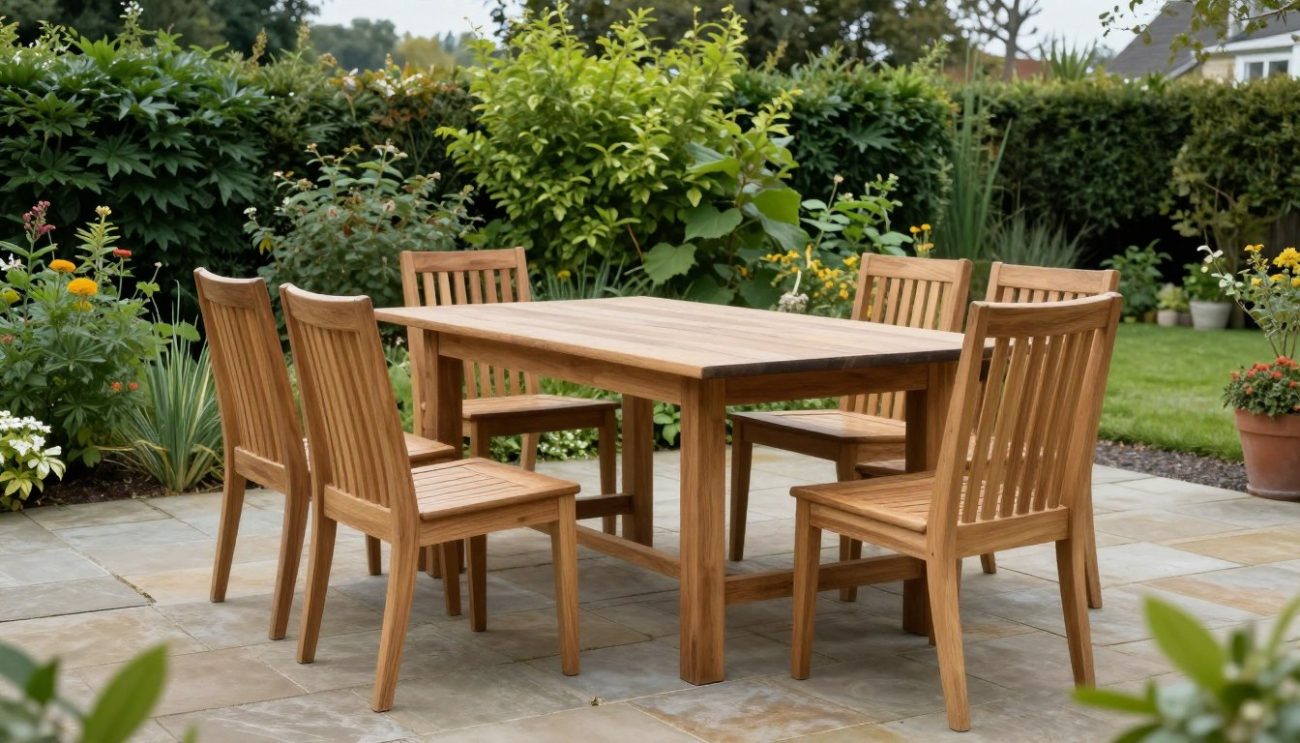
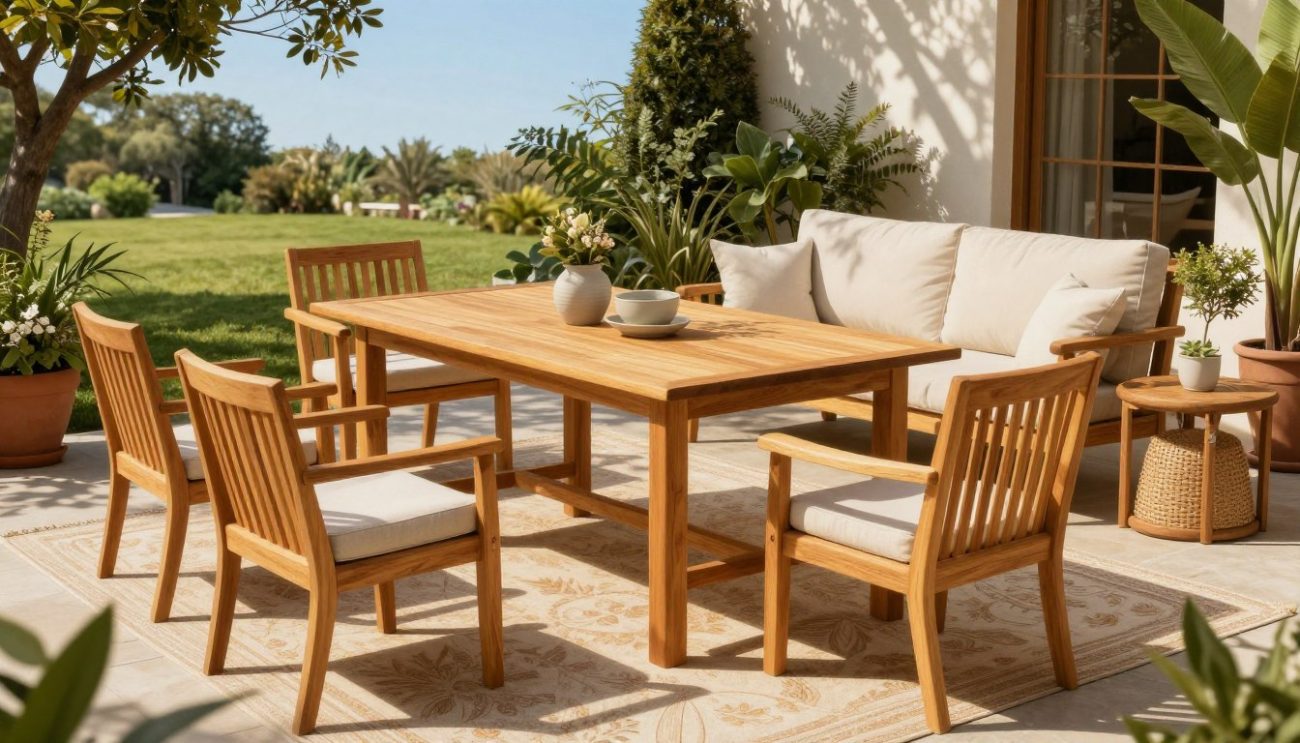
Teak outdoor furniture is a strong patio choice for shoppers who want natural-looking dining and seating designed for years of outdoor use. Chairs, tables, complete sets, and lounge pieces make it easy to shape an arrangement around the way you spend time outside.
Your patio may need a place for weekday meals, a quiet seat for reading, or room for both. The right design depends on your space, the number of people you host, and how much flexibility you want from each piece. This guide helps you compare materials, construction, furniture types, and practical order details.
Key Takeaways
- Choose chairs, tables, and lounge pieces according to the activities you want your patio to support.
- Compare the stated wood grade with visible consistency and construction details.
- Untreated teak changes color outdoors, while its natural patina is cosmetic.
- Plan dining and lounge areas with walkways and pulled-out chairs in mind.
- Confirm exact dimensions, included pieces, finish, and order terms before checkout.
Start with the way you want to use your patio, whether for meals, lounging, or both.
Why Choose Teak Outdoor Furniture for a Patio?
Teak’s natural oils help it resist moisture, rot, fungi, and pests, which makes the wood well suited to outdoor furniture. Its long history in marine and outdoor settings reflects how useful those qualities can be in exposed spaces.
Mortise-and-tenon joinery is a woodworking joint in which a projecting tenon fits into a matching mortise to connect two pieces of wood. Teak’s natural oils provide useful resistance, but sensible product selection and routine care still matter.
Choose teak for its material qualities, then judge each piece by its design and construction.
For a patio dining area, teak can bring a warm wood surface to a table and coordinated chairs. For a quieter corner, a single seat or a lounge group can make the outdoor space more inviting.
Teak outdoor furniture still varies in design, build, and finish. A well-made table can suit frequent meals, while a compact chair may be a better fit for a narrow balcony.
Natural resistance does not make every piece identical or remove the need to clean it. Look at how the furniture will be used, where it will sit, and what care its maker recommends.
Choose teak for its material qualities, then match the design and construction to how your patio will be used.
How to Tell Grade A, B, and C Teak Apart
Grade A, B, and C refer to different sections of the teak tree, and those sections differ in natural oil content and appearance. Grade A comes from the heartwood and has more natural protective oils than lower grades.
The grade can help you compare teak furniture, but it is only one part of assessing quality. The table below summarizes where each wood category comes from and its typical traits.
| Grade | Tree section | Typical oil, color, or durability traits |
|---|---|---|
| Grade A | Heartwood | More natural protective oils; typically more consistent in color and grain |
| Grade B | Outer heartwood | Generally lighter, with more varied color and grain than Grade A |
| Grade C | Outer sections of the tree | Very little natural oil; more easily damaged |
Grade A Comes From the Heartwood
Heartwood sits at the center of the tree. Its higher natural oil content helps explain why Grade A is often selected for outdoor use.
Look for a clear grade description rather than relying on a broad label such as “premium.” Even within a stated grade, individual boards can show natural differences in grain and tone.
Grade B Comes From Outer Heartwood
Grade B is cut from outer heartwood, so it tends to look lighter and less uniform than Grade A. Those visible differences can matter if you want a coordinated appearance across a dining arrangement.
Grade C Comes From the Outer Sections
Grade C comes from the outer sections of the tree and has very little natural oil. That lower oil content makes it more easily damaged than the higher grades.
A grade label alone does not describe every construction or design detail. Compare both the stated grade and the visible consistency of the wood when reviewing a piece.
What Happens to Teak Outdoors Over Time?
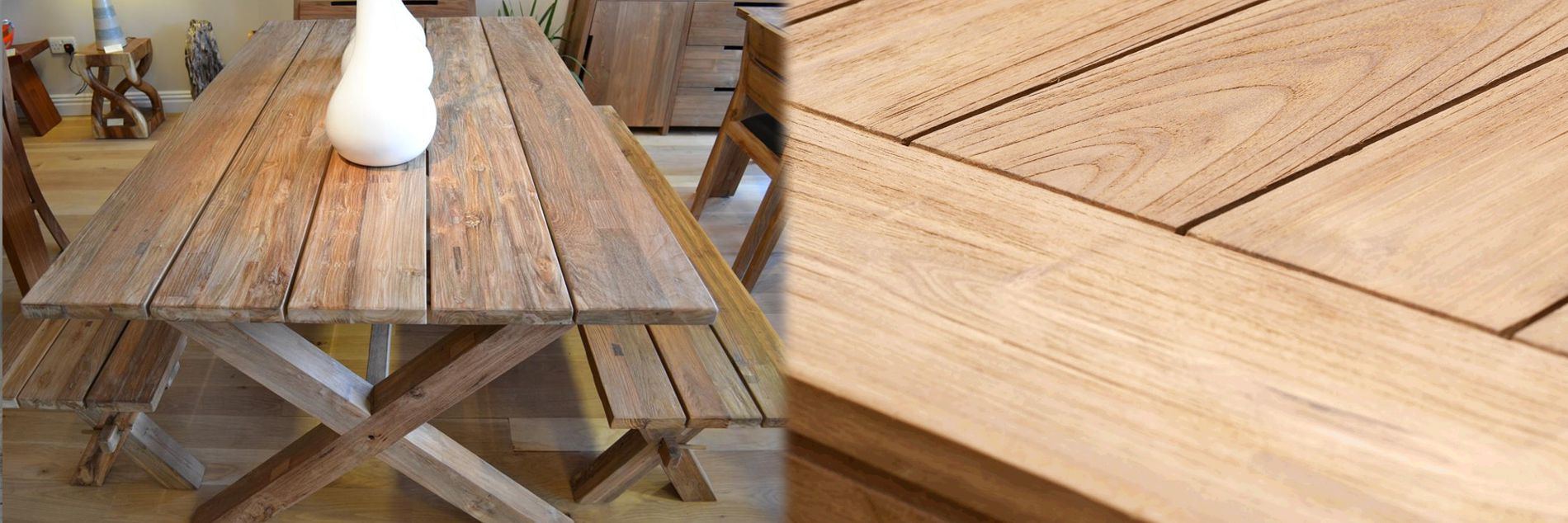
Untreated teak gradually weathers to silver-gray outdoors, a cosmetic change that does not reduce its durability or performance. Untreated teak may take 3-7 years outdoors to develop a silver-gray patina.
Patina describes a surface color change, not structural failure. A silver-gray surface is a natural result of outdoor exposure and does not mean the wood has stopped functioning as furniture.
Sunlight and exposure affect how quickly the color changes. A table in a sunny, open area may weather at a different pace from a chair under a covered porch.
The shift can be gradual, so the surface may show a mix of original wood tones and gray as it develops. That variation is part of the outdoor appearance rather than proof of damage.
The choice is mainly about appearance: you can prefer the original wood color or allow the surface to weather naturally. Consider the look you want before settling on a finish routine.
Before buying, think about how the furniture’s surface will look as its color changes over time. Decide whether you prefer the original wood color or the naturally weathered look before choosing a finish routine.
Care for Teak Through the Seasons
A simple cleaning routine is usually enough to keep outdoor teak presentable. HiTeak recommends cleaning its teak furniture at least twice a year, and mild soap and water can clean teak without a complicated routine.
Routine Cleaning
Give the surface a quick check when you tidy the patio. A few basic steps can remove everyday dirt before it builds up.
- Remove loose leaves, dust, and other surface debris.
- Wash the wood with mild soap and water.
- Use a soft brush to lift ordinary dirt from the surface.
Work gently across the wood, especially around joints and edges. A soft brush gives you control without turning routine cleaning into a harsh scrubbing job.
Cleaning Around Outdoor Exposure
Pollen and leaves can collect on teak furniture, particularly under trees or near garden beds. A quick sweep after a windy day can keep debris from lingering on tables and seats.
Outdoor furniture may sit beneath a cover during wet or dusty weather. Covers can help keep debris off, but they should not trap dampness against the wood for long periods.
Check the furniture after rain or a spell of humid weather. If the cover or cushions feel damp, give them room to dry rather than keeping the area sealed.
Cleaning needs can shift with the setting: a sheltered dining set may collect less debris than a table beneath leafy branches. A seasonal check also makes it easier to spot places where dirt has settled.
Clear away wet leaves and debris before they sit on the surface for an extended period.
Should You Oil or Protect Teak?
For HiTeak furniture, do not apply teak oil because doing so voids the warranty. HiTeak’s Teak Protector is a distinct product from teak oil, and teak oil is not required for durability.
Leaving teak untreated lets it weather naturally. If you want to use a finish product, distinguish Teak Protector from teak oil before choosing an approach.
| Approach | What it means | HiTeak warranty note |
|---|---|---|
| Leave untreated | Allow the wood to weather naturally | No teak oil is applied |
| Use Teak Protector | Apply HiTeak’s designated protector, which is not teak oil | Follow the care instructions for the specific piece |
| Apply teak oil | Use a product sold as teak oil | Applying teak oil voids the HiTeak warranty |
The choice between untreated wood and Teak Protector is a finish preference, not a requirement for preserving durability. Keep the product names clear when reviewing bottles or care directions.
For a HiTeak piece, teak oil carries a specific warranty consequence. Do not treat it as a substitute for Teak Protector or as a necessary step in caring for the wood.
Check the care instructions for the specific piece before applying any finish.
How Long Does Teak Furniture Last Outdoors?
Top-grade teak furniture can last 30+ years outdoors, while premium sets can last 50+ years with routine cleaning and sealing. Those time frames describe different expectations, not a guarantee for every piece.
Construction, exposure, and consistent care all affect how long teak furniture remains useful. A piece in a protected area may face different conditions from one left fully exposed to sun and rain.
Routine cleaning helps keep surfaces clear, while sealing is part of the care associated with the 50+ year potential for premium sets. The setting and upkeep both matter when you consider long-term use.
Quality also includes the way the furniture is assembled. A durable material cannot compensate for poor construction, so inspect the complete piece rather than judging its wood alone.
Think about the years of use you expect from a dining table or lounge arrangement. A higher initial commitment may make sense if the design fits your patio and the furniture suits your routine.
For a fair comparison, consider expected service life alongside the features and configuration you will use. Judge long-term value by expected years of use as well as the initial purchase decision.
Sustainable Sourcing and FSC Certification
FSC certification is a forest-management standard, not a grade assigned to a piece of teak. It concerns forest management and sourcing, not the quality category of the wood in a furniture item.
The Forest Stewardship Council applies 10 principles and 57 criteria to FSC-certified forests worldwide. The organization certifies about 550 million acres of forest.
Those figures describe the scale and framework of forest certification. They do not mean every teak product has FSC certification, so look for a clear claim tied to the item you are considering.
Use these checks when a product description discusses sustainable sourcing:
- Look for an explicit FSC certification claim.
- Confirm which parts of the product the claim applies to.
- Review any available chain-of-custody details.
A claim about one part of a product may not apply to every component. Read the wording closely and note whether it identifies the wood or another part of the item.
FSC certification and Grade A, Grade B, or Grade C teak answer different questions. One addresses sourcing and forest management; the other identifies a category of wood.
Look for clear certification details rather than relying on a general sustainability phrase.
Joinery, Hardware, and Build Quality
Construction details such as joinery and hardware help determine how well outdoor furniture handles repeated use. Mortise-and-tenon joinery creates a strong mechanical connection and can be repaired.
The joint has been used for centuries, and its mechanical fit can make it a useful construction feature. Repairability matters when you compare designs, but it does not guarantee every piece will be easy to fix.
Check these details before choosing a table, chair, or lounge piece:
- Examine how the joints meet at corners and connection points.
- Check whether the hardware is suitable for outdoor exposure.
- Look for clean, consistent assembly across the piece.
Joints that meet cleanly can give you a clearer sense of how the parts come together. Uneven gaps or rough assembly may deserve a closer look before you decide.
Hardware also faces the conditions around your patio. A product description should identify outdoor-suitable materials rather than leaving you to guess what the fasteners are made from.
Wood grade describes the material, while construction details tell you how the parts connect. Inspect the joints and hardware together rather than judging a piece by its wood alone.
Lounge Seating for Patios and Gardens
Choose lounge seating by deciding whether you want one relaxed seat or a shared place for several people. The layout should fit both your available spaces and the way you spend time outside.
Teak outdoor seating includes lounge chairs, chaises, sofas, sectionals, and benches. Each form supports a different arrangement, from a single reading spot to a group area for conversation.
Lounge Chairs and Chaises
Lounge chairs and chaises are individual relaxation seats. A single seat can work well in a smaller seating plan, where a sofa or sectional might take up more room than you need.
Place one beside a garden, near a pool, or in a quiet corner of the patio. The aim is to create a useful resting spot without making the rest of the space feel crowded.
A pair of separate seats gives you flexibility to angle them toward a view or conversation. You can also use one chair to add a personal retreat to a broader patio arrangement.
Sofas and Sectionals
A sofa or sectional creates a continuous group seating arrangement. That setup can suit guests who want to sit together, while separate lounge seats give each person a more distinct place.
Choose a continuous group when shared conversation is central to your patio routine. Separate seats can be easier to spread through the garden or reposition around different activities.
Benches offer a simpler additional seating form. They can provide a straightforward place for several people without turning the layout into a full lounge group.
Think about the main activity before selecting the number of seats. Match the number and form of seats to the activities you want the patio to support.
Dining Tables for Different Patio Plans
Start with the patio layout and usual dining group when choosing between a round, oval, or rectangular table. Extension availability is specific to each table, so do not assume a model expands.
Teak dining tables come in round, oval, and rectangular forms. Some are extending, while others are non-extending, making the exact table model important when planning for guests.
Round and Oval Dining Tables
Round tables can suit a centered layout where diners face one another around the table. Their shape can be a natural fit for a compact dining area with a gathering point in the middle.
Oval tables create a longer surface with softened ends. They can suit a patio plan that needs a lengthwise table without the square corners of a rectangle.
Rectangular and Extension Tables
Rectangular tables can align with a long patio or a dining area placed along a wall. Their straight sides make it easier to plan a defined arrangement in a narrow space.
| Table form | Typical layout fit | Extension consideration |
|---|---|---|
| Round | Centered dining area with diners around the table | Verify extension availability for the specific table |
| Oval | Lengthwise layout with softened ends | Verify extension availability for the specific table |
| Rectangular | Long patio or clearly defined dining zone | Verify extension availability for the specific table |
An extension can add flexibility for occasional larger meals, but the feature is not standard across all tables. Check the product details for the selected model before planning how many people it can accommodate.
Confirm whether the chosen model extends before planning for occasional larger gatherings.
Dining Chairs That Fit Your Table and Routine
Choose dining chairs by checking how they work with the table and how people will use them day to day. Chair and table dimensions need to suit each other, because not every chair fits every table.
Outdoor dining collections include dining chairs and side chairs. You can pair chairs with a table as a coordinated set or select them separately to build an arrangement around your needs.
Armchairs give each seat arms, while side chairs offer a simpler profile. Think about how much support you want and how easily you need to move chairs in and out.
If people will move chairs often, consider how the chair’s form and weight fit that routine. A chair that stays in one place can be chosen for a different role than one that shifts between dining and conversation.
Check chair and table dimensions together before you decide. Seat height, arm placement, and the space beneath the table can affect how comfortable the pairing feels.
Do not assume that a chair listed in the same collection automatically suits every table configuration. Compare the measurements for the exact pieces you plan to order.
Verify the chair dimensions against the selected table before ordering a coordinated dining arrangement.
Plan the Patio Space Around Your Furniture
Measure the patio and its walkways before settling on a furniture arrangement. As a general planning rule, allow about 36 inches of circulation clearance around a dining table.
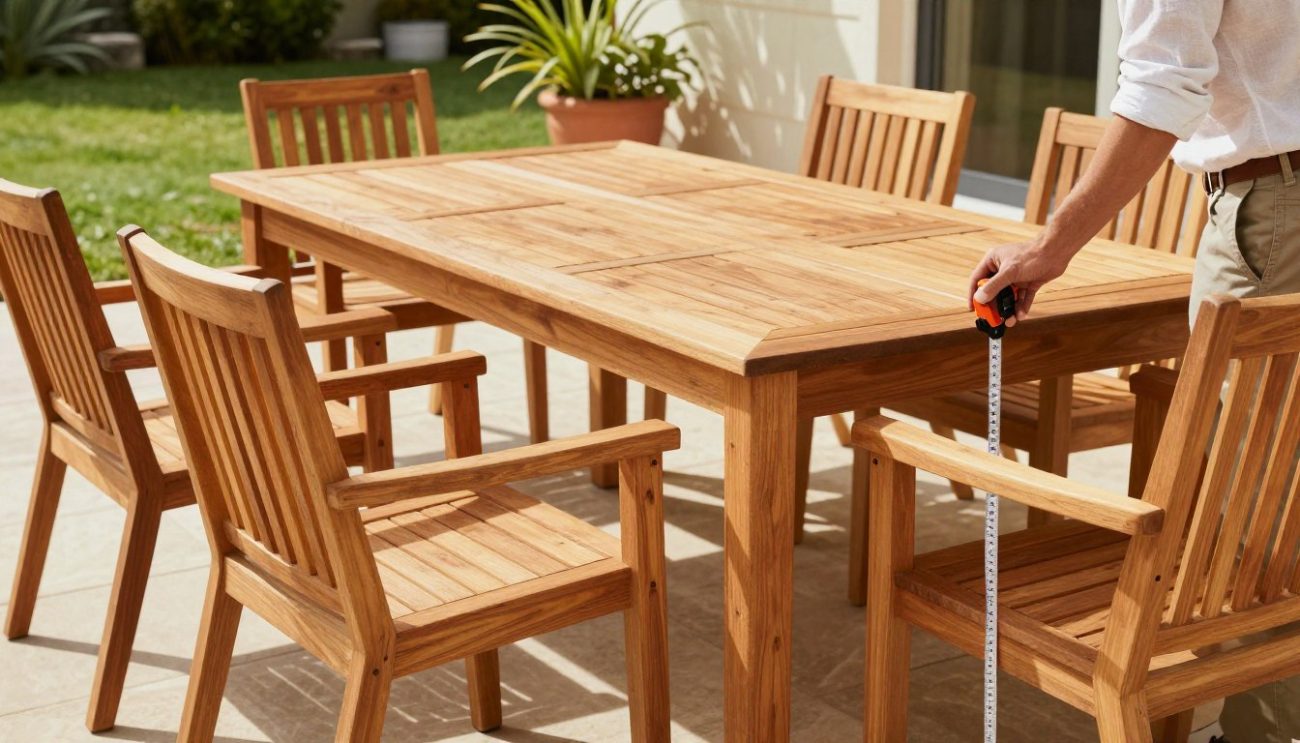
Measure Routes and Clearances
Use a simple sequence to check whether furniture can fit and still function:
- Measure the patio, including its usable width and length.
- Map doors, steps, and the traffic paths people need to use.
- Mark the furniture footprint on your plan or on the patio.
- Check clearance with dining chairs pulled out from the table.
Budget about 24 inches of table edge per seated diner as a general planning figure. Actual needs shift with the layout, chair size, and way people move through the space.
The circulation figure is a starting point, not a guarantee that every arrangement will feel comfortable. Door swings, planters, and other fixed elements can change the usable area.
Match Furniture to Activity Zones
A dining zone needs room for a table, chairs, and people moving around them. A lounge zone serves a different activity, with seats arranged for relaxing or conversation.
Keep a clear route between the two zones if your patio supports both. A direct path helps people move between dining and lounging without cutting through the middle of a seating group.
Mark the walking route before finalizing the position of each piece. Leave enough room to move around the arrangement, not just enough room for the furniture to fit.
Build a Set or Choose Individual Pieces
A coordinated set simplifies matching, while individual pieces give you more control over the arrangement. Choose the option that covers your essential activities without adding pieces your space will not use.
A complete dining arrangement pairs a table with dining chairs. An outdoor plan can also combine separate lounge chairs, sofas, sectionals, and tables.
| Choice | Best fit | What to check |
|---|---|---|
| Dining set | A matched table-and-chair arrangement | Included table and chair count |
| Lounge group | A shared seating area for relaxing | Included seats and any accompanying table |
| Individual pieces | A custom arrangement for distinct needs | Compatibility of the selected items |
Use these three factors to narrow the choice:
- How the space is used during a typical week.
- Which pieces are essential for your planned activities.
- Whether a coordinated design matters to you.
A set can make the design feel unified without requiring you to compare every piece separately. Individual products can be useful when your patio needs a particular combination or only one additional item.
Check exactly what the arrangement includes, since a product name alone may not make the piece count clear. Choosing by contents helps you compare complete products fairly.
Choose a complete set when its included pieces match the way you plan to use the space.
The Palm Bar Set’s Materials and Craftsmanship
HiTeak’s Palm Bar Set combines Grade-A South American teak with mortise-and-tenon joinery and marine-grade 316 stainless steel hardware. Each set takes 200+ hours of skilled craftsmanship.
The stated wood origin identifies the teak as South American, and the Grade-A label describes its wood category. Together, those details provide a more specific material description than a general teak furniture listing.
Mortise-and-tenon joinery identifies how the set’s wooden components connect. Marine-grade 316 stainless steel identifies the hardware material used in this named product.
The 200+ hour craftsmanship figure applies to each Palm Bar Set. It describes the skilled work involved in making this set, not a time estimate for other products in the collection.
These specifications can help you compare the Palm Bar Set with the needs of your own patio. They do not establish a warranty or guarantee a particular service life.
Consider whether a bar-height arrangement suits your planned use and available space. Compare these listed specifications with the requirements of your own patio and intended use.
Palm Bar Set Warranty Terms
The Palm Bar Set’s limited warranty is 4 years for residential use and 2 years for contract or commercial use. Separate component terms and exclusions apply, so the stated periods are not the full set of conditions.
First, identify how you plan to use the product. A home patio falls under a different stated period from contract or commercial use.
Use this checklist while reviewing the applicable terms:
- Identify whether the intended use is residential or commercial.
- Review separate terms that apply to individual components.
- Read the listed exclusions.
- Retain the purchase and warranty information.
The 4-year and 2-year periods describe the stated limited warranty by use type. They do not remove the need to read the terms that apply to the product and its components.
Keep the order record with the warranty details so you can find both later. Clear records can help you identify which terms were in effect for your purchase.
Read the applicable component terms and exclusions before placing an order.
A Practical Checklist Before You Order
Before ordering, make sure the exact pieces and dimensions match the plan for your patio. The total cost depends on the selected pieces, dimensions, materials, and configuration.
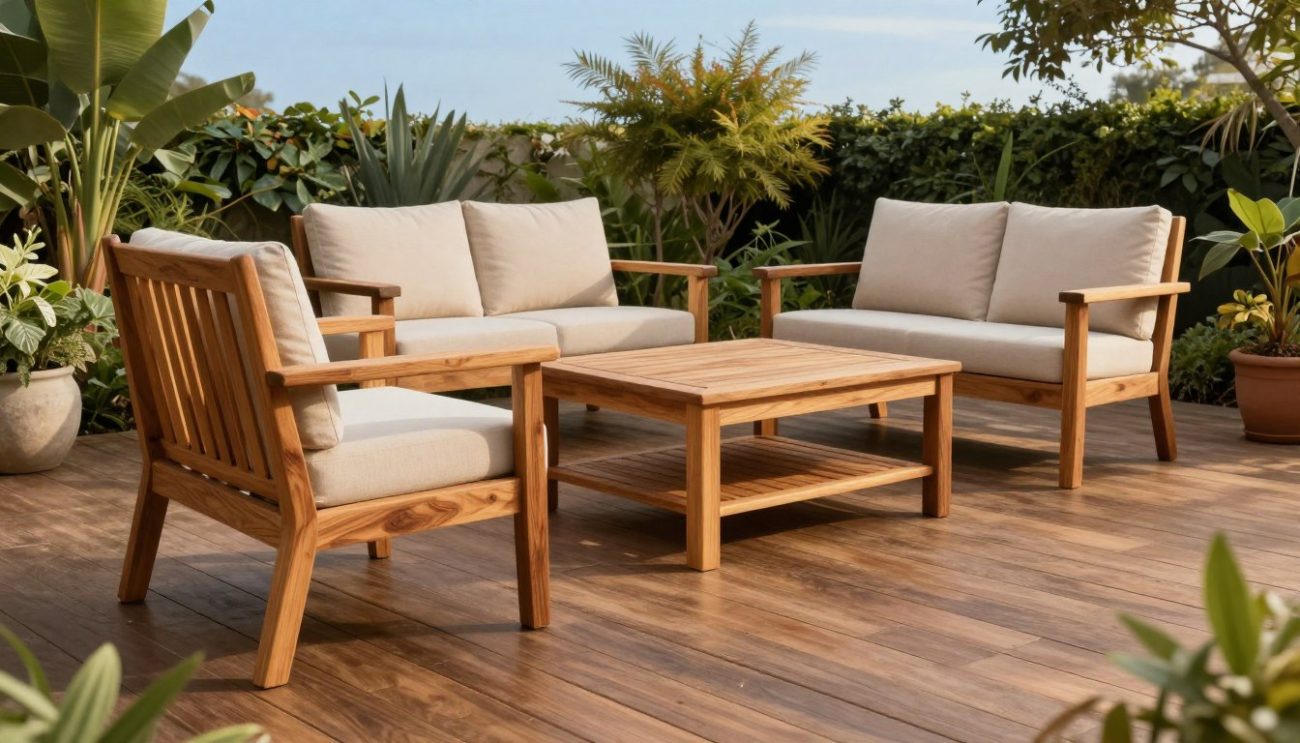
Verify Dimensions and Configuration
Confirm the measurements against your patio plan, including the space needed for the furniture to function. Check the included pieces and their count, not only the arrangement’s main product image.
| Check | What to verify | Why it matters |
|---|---|---|
| Dimensions | Furniture measurements against the patio plan | Confirms the arrangement fits the intended space |
| Piece count | Number and type of included items | Shows what the order actually contains |
| Finish choice | Selected finish for the pieces | Matches the look you intend to receive |
| Order details | Delivery and order terms shown at checkout | Clarifies the conditions for the order |
Look at the full configuration if your order combines dining and lounge furniture. A change in the number or type of pieces can affect the fit and the overall cost.
Check Finish and Order Details
Confirm the selected finish for each product before checkout. If your arrangement includes different pieces, check that the finish selection applies to all of them.
Review delivery and order terms shown at checkout. Those details are part of choosing the configuration, especially when several products are included in one order.
Compare the total contents of the arrangement rather than assuming every set includes the same pieces. Review the final configuration and order terms on the product page and at checkout.
Before you place an order, check the exact configuration, finish, and terms shown for your selected products.
Keep a record of the final details you selected, including dimensions and piece count. That gives you a clear reference for the arrangement you chose.
Conclusion
A well-chosen teak arrangement brings together the right pieces, sturdy construction, and a layout that suits your outdoor routine. Grade, construction, and fit should guide your choice, along with the dining or lounge activities you want the space to support.
Browse the collection and compare the pieces with your patio measurements before deciding. Measure your patio, shortlist the pieces you need, and compare the details before ordering.